The Sagittal Secret: Are Elongated Skulls the Missing Link to Sasquatch?

The mist clings to the canopy of the Pacific Northwest like a dense, impenetrable shroud. A silence hangs in the air, so thick it almost feels tactile, broken only by the distant rustle of leaves. Deep within these primeval woods, a hiker freezes mid-step as a massive, bipedal figure emerges over a ridge. The encounter is immediately striking—not merely due to the creature’s impressive height or the matted, reddish-brown fur that seems to shimmer in the filtered sunlight, but because of the distinctly conical shape of its head. The high, sloping forehead tapers to a sharp, pronounced peak, creating a silhouette that is both alien and unmistakably deliberate. Witnesses across continents consistently report this “pointed head,” yet conventional science dismisses it as an optical illusion, misperception, or incidental anatomical variation.
Thousands of miles away and millennia in the past, the arid sands of the Paracas Peninsula in Peru conceal an equally enigmatic phenomenon. Archaeologists unearthed human remains with skulls elongated far beyond what is considered typical for Homo sapiens. These cranial forms, towering and exaggerated, challenge the parameters of standard human anatomy, leaving more questions than answers. Are these simply culturally modified skulls, or do they reflect a deeper biological reality, one that resonates unexpectedly with the pointed heads described in Sasquatch sightings?
The convergence of these distant mysteries compels an interdisciplinary perspective, merging anthropology, cryptozoology, and the study of oral traditions. Both phenomena—the elongated skulls and Sasquatch sightings—invite a reconsideration of what is biologically possible and what may have persisted, unseen, alongside humanity for millennia. The evidence may be fragmentary, yet the patterns are striking and demand rigorous examination rather than dismissal.
Two Mysteries, One Possible Lineage
For centuries, mainstream scholarship has treated elongated skulls and Bigfoot sightings as entirely unrelated. Elongated skulls are cataloged under anthropological studies as artifacts of cultural cranial modification—an intentional practice to signify social rank, spiritual significance, or aesthetic preference. Sasquatch, conversely, is relegated to cryptozoological curiosity: a “phantom” species of folklore and anecdotal evidence, lacking verifiable remains. These classifications have created rigid conceptual boundaries, limiting the possibility of interdisciplinary investigation.
Yet when we juxtapose the descriptive data from contemporary Sasquatch encounters with the morphometric analysis of ancient elongated skulls, the conceptual boundaries begin to blur. Height, cranial angle, and overall silhouette in both phenomena suggest a nontrivial resemblance. By examining these records side by side, scholars are compelled to ask whether these phenomena represent independent anomalies or fragments of a single, hidden lineage. The implications are staggering: a relict hominid species, long presumed extinct, may have persisted across continents, interacting with early humans while remaining largely concealed.
Historical records and early explorer notes provide additional context. Accounts from the 19th and early 20th centuries occasionally describe sightings of enormous, humanlike creatures with pointed or conical heads. These descriptions appear across diverse regions, from the dense forests of the Pacific Northwest to the isolated valleys of the Rockies. When considered alongside archaeological discoveries, a pattern emerges—an enduring morphology with a persistent presence in both space and time.
Comparative studies reveal consistent traits in reported Sasquatch morphology: conical skulls, prominent brow ridges, heavy musculature, and an imposing stature. While these characteristics are often dismissed in isolation, when placed alongside anomalous cranial evidence from ancient specimens, they suggest a pattern too persistent to ignore. This challenges the compartmentalized assumptions of modern anthropology and cryptozoology, encouraging a more holistic understanding of human and non-human lineages.
Anatomy of the Pointed Head
Understanding the plausibility of a link requires a careful review of cranial anatomy. In high-order primates, particularly gorillas and orangutans, a sagittal crest runs along the apex of the skull. This ridge anchors massive temporalis muscles, necessary to sustain formidable jaw strength. Similarly, the conical shape described in Sasquatch reports could represent a convergent anatomical adaptation, supporting both immense musculature and a structurally resilient skull.
Witnesses consistently report that Sasquatch heads appear tall, sloped, and robust. Such morphology would be functionally advantageous for a creature of substantial size and strength, providing structural support for powerful neck and jaw muscles. It also explains the recurring visual impression of a “pointed” or “triangular” silhouette in forested environments, where light and shadow accentuate cranial height and slope.
Archaeological examinations of Paracas and other pre-Columbian cranial specimens reveal elongation that, superficially, aligns with Sasquatch morphology. While mainstream anthropology attributes these to artificial cranial deformation, anomalies in bone thickness, cranial volume, and suture patterns suggest that some specimens may not conform entirely to simple head-binding explanations. These irregularities imply that at least a subset of elongated skulls may reflect a genuine, non-human anatomical adaptation rather than merely aesthetic modification.
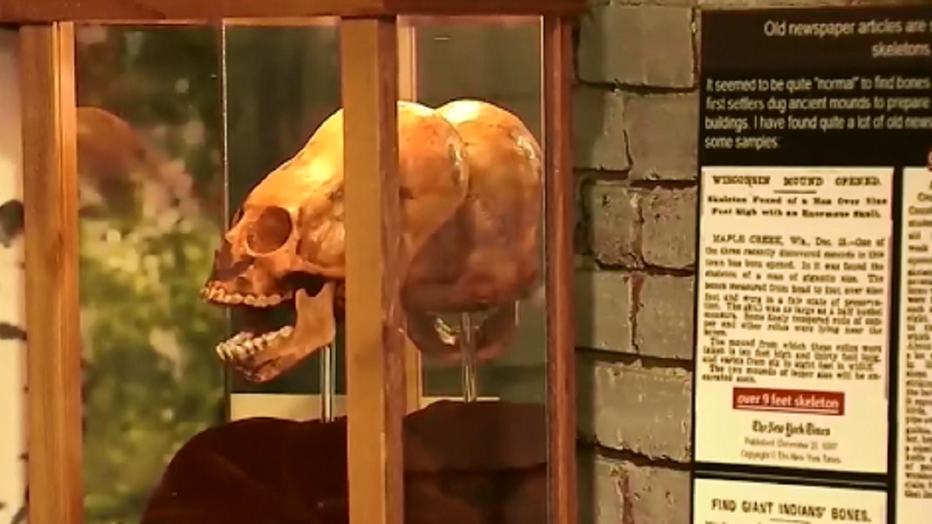
Biomechanical studies further suggest that such cranial adaptations could be protective. A taller, reinforced cranium may shield against interspecific conflict, environmental trauma, or accidental falls, especially for creatures navigating rugged, forested terrain. The morphological parallels between ancient skulls and modern Sasquatch reports may therefore reflect both evolutionary necessity and survival strategy, pointing to a functional consistency across time.
Genetic Clues and Migration Theories
Recent investigations into the DNA of select elongated skulls have generated both fascination and controversy. Degraded samples occasionally reveal sequences that diverge from conventional human alleles, sparking intense debate within academic circles. While skeptics argue contamination or misinterpretation, proponents suggest these sequences may indicate a previously unrecognized hominid branch that coexisted with early humans.
Further complicating the picture is the apparent geographic distribution of elongated skulls. Specimens emerge not only from the Paracas region but across parts of Eurasia and the Caucasus, suggesting a network of populations potentially spanning multiple continents. This distribution mirrors the hypothetical migration routes of early hominids and megafauna, implying a coordinated dispersal or repeated colonization across diverse ecosystems.
Some researchers propose a bifurcated lineage model: one branch integrating into nascent civilizations as ceremonial elites, while another remained in remote wildernesses. This model accounts for both highly curated burials and the sporadic, fleeting nature of modern Sasquatch sightings. It implies a population capable of both social integration and adaptive retreat—a dual strategy that could explain both archaeological and anecdotal data.
Genetic anomalies further suggest potential hybridization events or interactions with other hominid populations. Mitochondrial sequences and unusual cranial protein markers in a minority of specimens defy simple explanation within known human variation. These markers hint at a complex evolutionary history, potentially including cross-species gene flow, environmental adaptation, and prolonged survival in isolated ecological niches.
Environmental pressures, including climate fluctuations, glaciation, and habitat fragmentation, may have influenced migration patterns and population dynamics. Such pressures provide a plausible context for both the survival of remote populations and the localized emergence of cranial anomalies. Taken together, the genetic, archaeological, and environmental data reinforce the hypothesis that modern Sasquatch sightings could represent the lingering presence of a hidden hominid lineage persisting from ancient times to the present day.
Indigenous Oral Traditions and the Giants
Physical evidence alone cannot fully convey the scope of this mystery. Indigenous oral traditions across North America provide a rich and detailed narrative that complements both archaeological and contemporary reports. Numerous accounts describe towering, powerful beings—often with reddish hair and extraordinary physical strength—who interacted directly with human communities. The Paiute, for instance, tell of the Si-Te-Cah, a people described as formidable giants with distinctive cranial features, while other tribes recount similar encounters with enormous, intelligent, humanlike figures across the Pacific Northwest and the Great Plains.
These beings are almost never depicted as mere animals. Instead, they are portrayed as sentient, socially organized, and capable of both territorial defense and strategic behavior. Descriptions frequently emphasize a pronounced conical head, immense musculature, and unusual odor—traits that correspond strikingly with modern Sasquatch reports. The consistency across cultures, geography, and historical timeframes lends credibility to these oral histories as repositories of empirical observation, preserved through generations with remarkable fidelity.
Oral traditions often encode collective memory of ecological, social, and anthropological realities. The persistence of these stories, particularly when aligned with anomalous cranial evidence, suggests that Indigenous knowledge may preserve insights into hominid species that science has yet to formally recognize. Details in these narratives, from hunting behaviors to habitat preferences, reveal ecological awareness and intimate familiarity with elusive populations that were rarely seen by outsiders.
Analysis of the stories further reveals subtle behavioral and anatomical insights. Many accounts note nocturnal or crepuscular activity, social hierarchies, complex vocalizations, and a tendency to avoid human settlements—behaviors consistent with an intelligent, adaptive species. In addition, descriptions of physical strength, tool use, and survival strategies often align with what one would expect of a large, forest-dwelling primate capable of coexisting alongside humans over millennia.
The intersection of physical remains, eyewitness accounts, and Indigenous narrative forms a triad of evidence that, while circumstantial, is mutually reinforcing. Collectively, they suggest that Sasquatch and the beings of Indigenous legend may not merely coexist conceptually, but biologically, representing a lineage that has both endured and interacted with human populations over thousands of years. The convergence of morphological, genetic, and cultural evidence paints a more cohesive picture than any single line of inquiry alone.
Mainstream Explanations and Scientific Rebuttal
Anthropologists generally assert that elongated skulls are the product of deliberate cranial deformation, a documented practice in multiple ancient societies. Infants’ skulls, when bound or shaped during critical growth periods, acquire elongated forms without affecting overall brain capacity.

Yet a subset of skulls defies this categorization. Some exhibit irregular sutures, increased cranial volume, or unusual bone density—features that cannot be explained by simple cultural manipulation. These outliers, though rare, provoke important questions about the boundaries of Homo sapiens’ variation and the potential for unrecognized species or subspecies to have coexisted alongside early humans.
Critics argue that anomalies are either congenital defects or statistical noise. Proponents counter that the recurring appearance of these traits across distant regions and disparate times indicates a systematic pattern rather than coincidence.
The Problem of Missing Modern Evidence
One of the central challenges of the Sasquatch hypothesis is the absence of definitive physical remains. Skeptics argue that any surviving hominid population would inevitably leave bones, DNA, or other indisputable evidence in the modern record. The lack of such remains is often cited as a decisive objection, reinforcing the perception that Sasquatch cannot exist.
Proponents counter that environmental factors, such as dense forests, rapid decomposition, and high humidity, could accelerate the loss of remains. Furthermore, intelligent concealment or cultural avoidance behaviors may reduce encounters with human populations.
Historical accounts suggest that anomalous skeletons may have been discovered and subsequently removed from public record, creating gaps in the official archaeological narrative. Additionally, sporadic sightings, footprints, and anecdotal evidence hint at the presence of a population adapted to evade human detection while persisting in marginal habitats over generations.
Conclusion: A Shadow Lineage?
Across millennia and continents, a convergence emerges: the anomalous elongated skulls of ancient civilizations, the giants of Indigenous oral history, and the pointed-head morphology described in modern Sasquatch encounters. Taken collectively, these threads hint at a shadow lineage of hominids—one that has persisted alongside humanity largely unseen and unrecognized by mainstream science.
If elongated skulls reflect biological reality rather than purely cultural modification, Bigfoot may represent a surviving branch of this lineage—a species that once walked openly alongside humans, only to retreat into ecological margins as civilizations expanded.
Whether viewed as myth, misidentification, or a hidden chapter of human history, the question endures. The skulls lie buried in the sands, the sightings persist in dense forests, and humanity may never have walked alone.

About Bigfoot Truth Network
Bigfoot Truth Network is dedicated to examining reports, sightings, and cultural accounts of Bigfoot (Sasquatch) through the lens of folklore research, investigative inquiry, and critical analysis. We provide in-depth exploration of eyewitness testimonies, geographic patterns, historical reports, and emerging claims, carefully comparing them with documented evidence, environmental factors, and established wildlife science.
Bigfoot Truth Network provides a deeper understanding of the Bigfoot phenomenon in relation to modern culture and reported encounters. We encourage critical thinking, open-minded investigation, and awareness of the ongoing debate while emphasizing the importance of distinguishing between folklore, misidentification, and unexplained accounts.
Join us every Thursday night at 7:30 PM CST for our weekly Bigfoot Truth Network broadcast on YouTube. We discuss the most compelling sightings, recent reports, and developments in Bigfoot research and examine their significance within the broader mystery.
Listen Live